Biomod/2014/Functionalization: Difference between revisions

From OpenWetWare
Jump to navigationJump to search
R. Matis (talk | contribs)
No edit summary
R. Matis (talk | contribs)
No edit summary
Line 8: Line 8:
     height: auto;
     height: auto;
     margin: 0 auto;
     margin: 0 auto;
     background-color:white;
     background-color:#be1e3c;
     border:white thin solid;
     border:#be1e3c thin solid;
     }
     }
     #goTopBtn {POSITION: fixed;TEXT-ALIGN: center;LINE-HEIGHT: 30px;WIDTH: 100px;BOTTOM: 35px;HEIGHT: 100px;FONT-SIZE: 12px;RIGHT: 30px;}
     #goTopBtn {POSITION: fixed;TEXT-ALIGN: center;LINE-HEIGHT: 30px;WIDTH: 100px;BOTTOM: 35px;HEIGHT: 100px;FONT-SIZE: 12px;RIGHT: 30px;}

Revision as of 19:24, 22 October 2014

<html>

<head>
 <title> Mainpage </title>
  <style>
    body{
    align: left;
    width: 1200px;
    height: auto;
    margin: 0 auto;
    background-color:#be1e3c;
    border:#be1e3c thin solid;
    }
    #goTopBtn {POSITION: fixed;TEXT-ALIGN: center;LINE-HEIGHT: 30px;WIDTH: 100px;BOTTOM: 35px;HEIGHT: 100px;FONT-SIZE: 12px;RIGHT: 30px;}
    #content{margin:0;padding:0;border:0px;}
      /*hidden section*/
      .firstHeading{display:none;}
      #sidebar-main{display:none;}
      #p-cactions{display:none;}
      #p-personal{display:none;}
   </style>
</head>
<body>


<colgroup span="4"></colgroup>
       <img src="http://openwetware.org/images/thumb/2/27/Nanoscooter_TUBS-siegel.jpg/800px-Nanoscooter_TUBS-siegel.jpg"
        width="383" height="142" alt="Logo TU Braunschweig">      
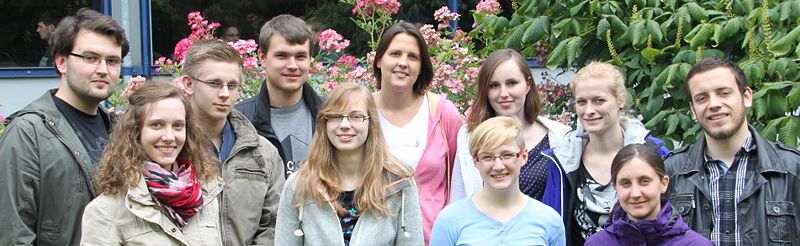
      <img src="http://openwetware.org/images/thumb/c/c3/Nanoscooter_Gruppenfoto-Banner.jpg/800px-Nanoscooter_Gruppenfoto-Banner.jpg"
       width="463" height="142"
       alt="our group"
       title="our group (Nanoscooter) for Biomod competition">
<img src="http://openwetware.org/images/2/24/Nanoscooter.jpg" width="165" height="142" alt="Logo Nanoscooter">


Team Nanoscooter Braunschweig

<colgroup width="158" span="6"></colgroup>
<a href="Braunschweig">Home</a>
<a href="Team">Team</a>
<a href="idea">Project idea</a>
<a href="">Results</a>
<a href="">Perspectives</a>
<a href="Sponsoren">Sponsoring</a>


<colgroup> <col width="200px"> <col width="800px"> <col width="200px"> </colgroup>
  <a href="Braunschweig"><img src="http://openwetware.org/images/b/bf/Zur%C3%BCckpfeil.png"
        width="103" height="88" alt="Back"align="left"></a>

Pt-Particle Functionalization

The gear of the Nanoscooter is realized by a catalytic mechanism of the decomposition of hydrogen peroxide. As catalyst platinum nanoparticles are used, which are attached to the back of the Nanoscooter. To attach the particles to the Nanoscooter, DNA hybridization is used: The Nanoscooter features 12 capturing strands in the back and the particles are functionalized with the complementary sequence. This can be accomplished by using DNA strands with a thiol-group at the 5’-end – the thiol reacts with the particle surface and a covalent bond is created.

The decomposition of hydrogen peroxide is based on a catalytic mechanism: Platinum decreases the activation energy of the decomposition of hydrogen peroxide, so that it easily can be break down into oxygen and water. The emerging oxygen gas induces a repulsion so that the Nanoscooter can drive over the surface.


Functionalization of platinum nanoparticles
A vial and a magnetic stir bar were washed with ethanol and MilliQ-water and dried afterwards. Then 1.8 mL MilliQ-water were mixed with 200 µL of 5 nm platinum nanoparticle solution (1 mg/mL). After that 100 µL thiol functionalized oligonucleotides (100 µM, 15T) were added and stirred overnight at room temperature.

The next day, 20 µL Tween20 (10 %) were added and stirred for 15 min. 20 µL Phosphate buffer (4:5 mixture of P8709 and P8584) were pipetted to the mixture and stirred for 15 min. After this step the sodium chloride concentration was increased in several steps up to a final concentration of 700 mM. The mixture was incubated overnight.

The liquid was filtered with an Amicon Ultra 30K Filter (4 krcf, 20°C, 3 min). The residue was removed and the filter refilled with 100 mM NaCl in PBS-buffer. The suspension was centrifuged for 15 min at 5 krcf and 20°C. This procedure was repeated two more times. Then the filter was flipped. To get the nanoparticles out of the filter it was centrifuged for 5 min at 5 krcf and 20°C.

The diameter of the platinum particles is analyzed by dynamic light scattering (DLS). The diameter of the not functionalized particles amounts 5.00 nm ± 0.70 nm, the diameter of the functionalized particles 13.61 nm ± 1.09 nm, as shown in figure 1.


<img src="http://openwetware.org/images/d/d6/Ptfunktionalisiert.png" width="75%" height="75%" >

Figure 1: Diameters of the functionalized and not functionalized platinum particles.

We therefore conclude that our Pt-particles are successfully functionalized with DNA and now ready for attachment to the DNA origami Nanoscooter!
</line>


</body>


</html>