Biomod/2012/UTokyo/UT-Hongo/Test2: Difference between revisions
No edit summary |
No edit summary |
||
| (13 intermediate revisions by the same user not shown) | |||
| Line 25: | Line 25: | ||
* { | * { | ||
text-shadow: 2px | text-shadow: 0px 1px 2px #aaa; | ||
} | } | ||
| Line 34: | Line 34: | ||
#header { | #header { | ||
width: 1080px; | width: 1080px; | ||
height: | height: 342px; | ||
background: url(http://openwetware.org/images/ | background: url(http://openwetware.org/images/3/3b/Biomod-2012-UTokyo-UT-Hongo_header_test2.png) no-repeat; | ||
background-size: 100% auto; | background-size: 100% auto; | ||
margin-bottom: 0px; | margin-bottom: 0px; | ||
| Line 119: | Line 119: | ||
#youtube { | #youtube { | ||
margin-bottom: 30px; | margin-bottom: 30px; | ||
} | |||
#video { | |||
} | } | ||
| Line 196: | Line 199: | ||
background: #f0f0f0; | background: #f0f0f0; | ||
padding: 12px; | padding: 12px; | ||
border: 1px solid #808080; | |||
} | } | ||
| Line 242: | Line 246: | ||
</head> | </head> | ||
<body> | <body> | ||
<div style="text-align: right"> | <div style="text-align: right"> | ||
<a href="http://openwetware.org/index.php?title=Biomod/2012/UTokyo/UT-Hongo/ | <a href="http://openwetware.org/index.php?title=Biomod/2012/UTokyo/UT-Hongo/&action=edit">edit this page</a> | ||
</div> | </div> | ||
| Line 253: | Line 258: | ||
<div id="menu"> | <div id="menu"> | ||
<ul class="menu"> | <ul class="menu"> | ||
<li><a href="/wiki/Biomod/2012/UTokyo/UT-Hongo"> | <li><a href="/wiki/Biomod/2012/UTokyo/UT-Hongo">Top</a></li> | ||
<li><a href="/wiki/Biomod/2012/UTokyo/UT-Hongo/Intro"> | <li><a href="/wiki/Biomod/2012/UTokyo/UT-Hongo/Intro">Motives</a> | ||
<ul class="submenu"> | <ul class="submenu"> | ||
<li><a href="/wiki/Biomod/2012/UTokyo/UT-Hongo/Intro#Focus">Focus</a></li> | <li><a href="/wiki/Biomod/2012/UTokyo/UT-Hongo/Intro#Focus">Focus</a></li> | ||
| Line 282: | Line 287: | ||
<div id="youtube"> | <div id="youtube"> | ||
<h2>YouTube</h2> | <h2>YouTube</h2> | ||
<iframe width="1080" height="608" src="http://www.youtube.com/embed/KaU-tjKYBlQ" frameborder="0" allowfullscreen></iframe> | <div id="video"><iframe width="1080" height="608" src="http://www.youtube.com/embed/KaU-tjKYBlQ" frameborder="0" allowfullscreen></iframe></div> | ||
</div> | </div> | ||
| Line 292: | Line 297: | ||
<div class="column1 column"> | <div class="column1 column"> | ||
<p><a href="http://openwetware.org/wiki/Biomod/2012/UTokyo/UT-Hongo/Intro"><img src="http://openwetware.org/images/d/d7/Biomod-2012-UTokyo-UT-Hongo_Design_Thumb.jpeg" class="thumb" alt="" /></a></p> | <p><a href="http://openwetware.org/wiki/Biomod/2012/UTokyo/UT-Hongo/Intro"><img src="http://openwetware.org/images/d/d7/Biomod-2012-UTokyo-UT-Hongo_Design_Thumb.jpeg" class="thumb" alt="" /></a></p> | ||
<h2> | <h2>Motives</h2> | ||
<p> | <p></p> | ||
</div> | </div> | ||
<div class="column2 column"> | <div class="column2 column"> | ||
<p><a href="http://openwetware.org/wiki/Biomod/2012/UTokyo/UT-Hongo/Function"><img src="http://openwetware.org/images/a/a0/Biomod-2012-UTokyo-UT-Hongo-outline-2.jpg" class="thumb" alt="" /></a></p> | <p><a href="http://openwetware.org/wiki/Biomod/2012/UTokyo/UT-Hongo/Function"><img src="http://openwetware.org/images/a/a0/Biomod-2012-UTokyo-UT-Hongo-outline-2.jpg" class="thumb" alt="" /></a></p> | ||
<h2>Design</h2> | <h2>Design</h2> | ||
<p> | <p></p> | ||
</div> | </div> | ||
<div class="column3 column"> | <div class="column3 column"> | ||
<p><a href="http://openwetware.org/wiki/Biomod/2012/UTokyo/UT-Hongo/Assembly"><img src="http://openwetware.org/images/4/45/Biomod-2012-UToky%E2%80%8Bo-UT-Hongo-2012aug31no3x1_h.011m0.5.jpg" class="thumb" alt="" /></a></p> | <p><a href="http://openwetware.org/wiki/Biomod/2012/UTokyo/UT-Hongo/Assembly"><img src="http://openwetware.org/images/4/45/Biomod-2012-UToky%E2%80%8Bo-UT-Hongo-2012aug31no3x1_h.011m0.5.jpg" class="thumb" alt="" /></a></p> | ||
<h2>Result</h2> | <h2>Result</h2> | ||
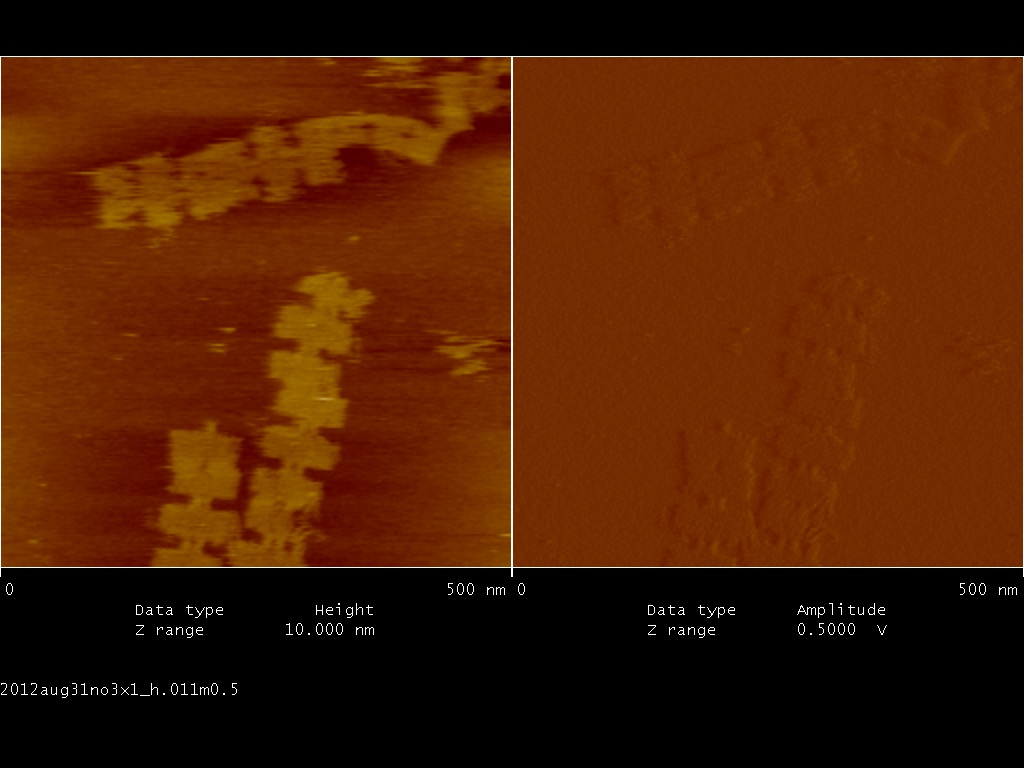
<p>In this section, we write about our experiment. | <p>In this section, we write about the result of our experiment. We can classify the experiment that we performed roughly into four themes: | ||
<ol> | |||
<li>Assembly of the DNA Shell</li> | |||
<li>Capturing Ability</li> | |||
<li>Immobilizing on microfluidic device</li> | |||
<li>Supporting Enzyme</li> | |||
</ol> | |||
We describe the part which I was able to confirm by each experiment.</p> | |||
</div> | </div> | ||
</div> | </div> | ||
| Line 315: | Line 327: | ||
<p><a href="http://openwetware.org/wiki/Biomod/2012/UTokyo/UT-Hongo/FutureWork"><img src="http://openwetware.org/images/c/cf/Fig.4-6.jpg" class="thumb" alt="" /></a></p> | <p><a href="http://openwetware.org/wiki/Biomod/2012/UTokyo/UT-Hongo/FutureWork"><img src="http://openwetware.org/images/c/cf/Fig.4-6.jpg" class="thumb" alt="" /></a></p> | ||
<h2>Future Work</h2> | <h2>Future Work</h2> | ||
<p> | <p> We aim to make a device that has wider usage than an enzyme. | ||
By putting together DNA Shell, certain target substances, and an enzyme, you can bring functionality or selectivity to the enzyme. | |||
It will become possible thanks to the diversity of DNA Shell. </p> | |||
</div> | </div> | ||
<div class="column3 column"> | <div class="column3 column"> | ||
| Line 336: | Line 350: | ||
</div> | </div> | ||
<div class="footer-section" id="section2"> | <div class="footer-section" id="section2"> | ||
<h3><a href="Biomod/2012/UTokyo/UT-Hongo/Intro"> | <h3><a href="Biomod/2012/UTokyo/UT-Hongo/Intro">Motives</a></h3> | ||
<ul> | <ul> | ||
<li></li> | <li></li> | ||
| Line 373: | Line 387: | ||
</div> | </div> | ||
<p id="copyright"> | <p id="copyright"> | ||
Copyright (C) 2012 | Design by Yuichi Nishwiaki | BIOMOD UT-Hongo | Copyright (C) 2012 | Design by Yuichi Nishwiaki | BIOMOD Team UT-Hongo | ||
</p> | </p> | ||
<br style="clear: both;"> | <br style="clear: both;"> | ||
Latest revision as of 10:00, 21 October 2012
<html> <head> <style>
- column-one { display:none; width:0px;}
.container{background-color: #ffffff; margin-top:0px} .OWWNBcpCurrentDateFilled {display: none;}
- content { width: 0px; margin: 0 auto auto 0; padding: 0em 0em 0em 0em; align: center;}
- column-content {width: 0px; float: left; margin: 0 0 0 0;padding: 0;}
.firstHeading {display:none; width:0px;}
- globalWrapper{width:1104px; background-color: #ffffff; margin-left: auto; margin-right: auto}
- column-one {display:none; width:0px;background-color: #ffffff;}
- content{ margin: 0 0 0 0; align: center; padding: 12px 12px 12px 12px; width: 1080px;background-color: #ffff; border: 0;}
- bodyContent{ width: 1080px; align: center; background-color: #ffffff;}
- column-content{width: 1080px;background-color: #ffff;}
- footer{display: none; position: center; width: 960px}
@media screen {
body { background: #ffffff url(http://openwetware.org/images/1/14/Biomod-2012-utokyo-uthongo-wrapper-bg.jpg) repeat; /* changed default background */ }
}
</style>
<style>
- {
text-shadow: 0px 1px 2px #aaa; }
- bodyContent, #column-content, #content {
background: #ffffff url(http://openwetware.org/images/1/14/Biomod-2012-utokyo-uthongo-wrapper-bg.jpg) repeat; }
- header {
 width: 1080px;
 height: 342px;
 background: url(http://openwetware.org/images/3/3b/Biomod-2012-UTokyo-UT-Hongo_header_test2.png) no-repeat;
 background-size: 100% auto;
 margin-bottom: 0px;
 padding: 0px 0px 0px 0px;
/* border-bottom: 1px solid #DEDEDE; */ }
- menu {
 display: block;
 width: 1076px;
 padding: 0px;
 background-color: black;
 border: 2px solid #888;
 margin-bottom: 30px;
}
ul.menu li a {
display: block;
/* border: 1px solid #474655; */
 padding: 8px;
 text-decoration: none;
/* color: #333; */
 color: #fff;
 width: 120px;
 margin: 0px;
 text-align: center;
 font-size: normal;
}
ul.menu li a:hover{
color: cyan;
}
ul.menu { /* display: none;
 position: absolute; */
 height: 45px;
 margin:0;
 padding:0;
 list-style:none;
 float: center;
}
ul.menu li { /* display:inline;*/
 margin:0;
 padding:6px;
 float: left;
 position: relative;
}
ul.menu li:hover ul {
 display: block;
 position: absolute;
 z-index: 100;
}
ul.submenu {
 display: none;
 list-style: none;
 background-color: #f0f0f0;
 border: 1px solid #ccc;
}
ul.submenu li {
 float: none;
 margin: 0px;
 height: 30px;
}
ul.submenu li a {
 text-align: left;
 margin: 0px;
 padding-left: 12px;
 color: black;
 text-decoration: none;
}
ul.submenu li a:hover {
color: gray;
}
- youtube {
margin-bottom: 30px; }
- video {
}
- description {
/* border-bottom: 1px solid #dedede; */ padding-bottom: 40px; /* margin-bottom: 30px; */ }
.block-container { overflow: hidden; margin-bottom: 12px; padding: 0px 0px 0px 0px; /* border-bottom: 1px solid #DEDEDE; */ }
h2.block-container { padding: 0px 0px 10px 0px; /* color: #303030; */ }
img.thumb {
 width: 338px;
 height: 215px;
}
.column a:hover img {
 opacity: 0.8;
 filter: alpha(opacity=80);
 background: #fff;
}
.column { width: 338px; height: 510px; padding: 5px; background: #333 url(http://openwetware.org/images/6/6e/Biomod-2012-utokyo-uthongo-column-bg.jpg) repeat; color: #ccc; }
.column h2 { color: #f0f0f0; }
.column1 { float: left; margin-right: 18px; }
.column2 { float: left; margin-right: 18px; }
.column3 { float: right; }
- navi {
 padding-bottom: 18px;
 margin-bottom: 48px;
 border-bottom: 1px solid #dedede;
}
.block h2 { font-size: medium; }
.block p { font-size: x-small; }
- myfooter {
width: 1080px; height: 250px; background: #f0f0f0;
padding: 12px;
border: 1px solid #808080; }
- myfooter a {
color: #666;
}
- myfooter h3 a {
text-decoration: underline;
}
- myfooter a:hover {
font-style: italic;
}
- footer-contents {
 padding: 12px;
 height: 140px;
}
- myfooter h2 {
color: #888;
}
.footer-section { width: 120px; float: left; margin-right: 30px; }
- section7 {
float: right;
}
.footer-section h3 {
font-size: small;
}
- copyright {
 text-align: center;
 color: #aaa;
}
</style>
</head> <body>
<a href="http://openwetware.org/index.php?title=Biomod/2012/UTokyo/UT-Hongo/&action=edit">edit this page</a>
Medical DNA Shell
<img src="http://openwetware.org/images/e/e8/Biomod-2012-UTokyo-UT-Hongo-Idia-4.jpg" width="350px"></img>
fig1. Schematic of Medical DNA Shell system
Methodologies to apply DNA for building precisely controlled nanostructures have greatly developed over the recent years. Our focus for BIOMOD is to utilize DNA to make a shell like structure which can capture molecules inside the shell-like body, as if a shellfish is eating its prey. Entrapment of the substrate was detected by the numerous florescent molecules that are attached to the body. This research may become a foundation for using DNA to mimic catalytic activity of enzymes.
Medical functions such as detection of diseases with small amount of blood are possible by using microfluidics. For example, detecting and sensing the concentration of Thrombin which causes blood coagulation is possible by using Shell and microfluidics developed by our team. In the future, we will develop medical DNA Shell system for monitoring components of blood, detecting diseases, inputting medicine by DNA Shell, computing system integrated in microfluidics.
YouTube
</body> </html>